Uncovering the key factors that drive college football success
Project Overview
This comprehensive analysis examines NCAA football data spanning from 2013 to 2023, covering over 145 different metrics for all FBS teams. Our goal was to identify the key performance factors that most strongly predict team success and provide actionable insights for college football programs.
Key Research Questions
What team performance metrics most strongly predict success?
Does defense actually win championships?
Which conference has been the most dominant over the last 10 years?
Are special teams crucial for success, or do they have minimal impact?
How do red-zone efficiency and third-down conversions relate to team rankings?
Our analysis combined exploratory data analysis, statistical modeling, and machine learning techniques to uncover the most important factors that contribute to winning in college football.
Offense vs Defense Impact
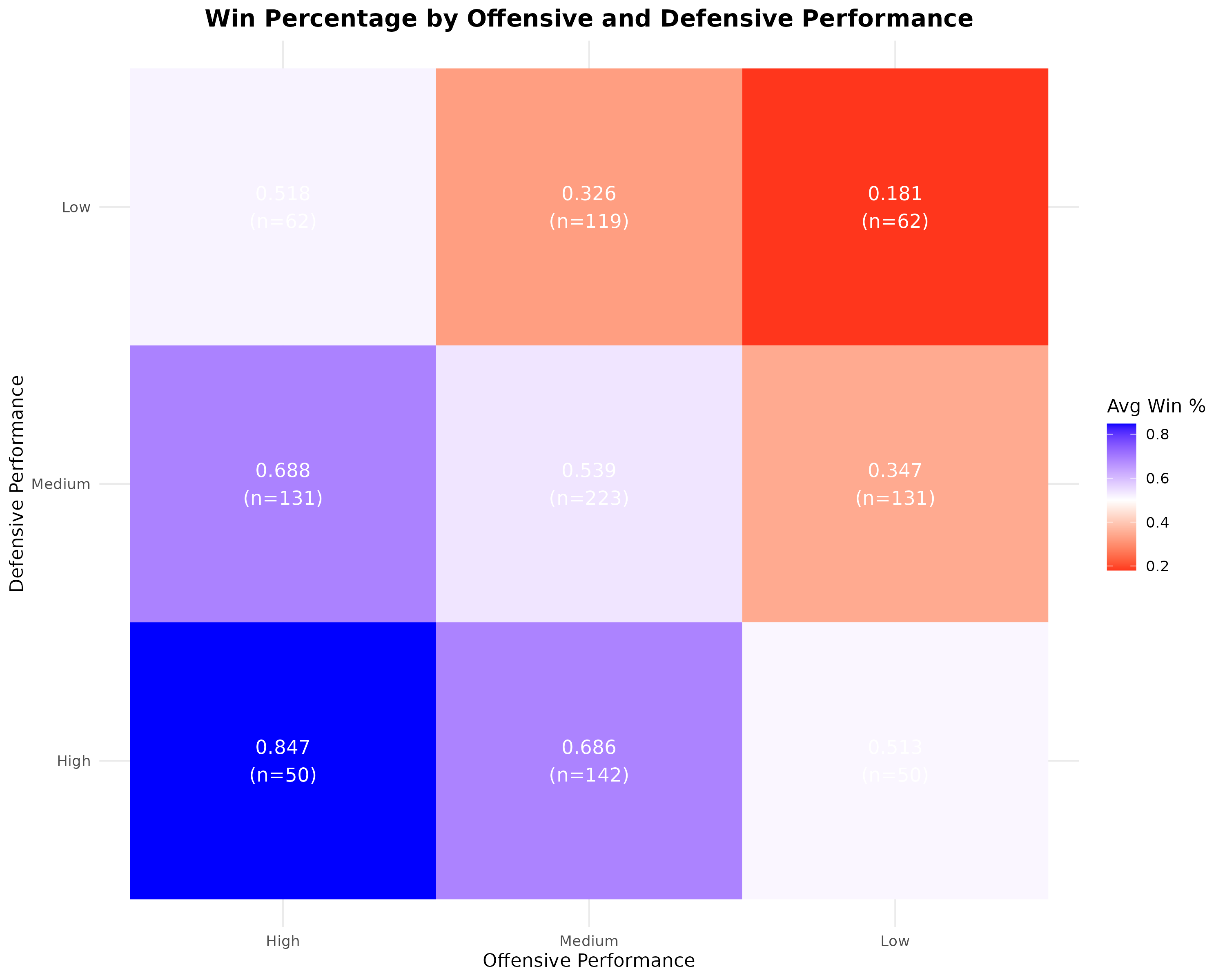
One of the most fundamental questions in football is whether offense or defense contributes more to team success. Our analysis provides a clear answer: balance is key.
High Offense + High Defense
84.7%
Win percentage
High Offense + Low Defense
51.5%
Win percentage
Low Offense + High Defense
51.2%
Win percentage
Low Offense + Low Defense
18.1%
Win percentage
Teams that excel in both offensive and defensive performance have a dramatically higher win percentage (84.7%) compared to teams that are strong in only one area (approximately 51%). This demonstrates that balanced teams consistently outperform one-dimensional teams.
Efficiency Metrics
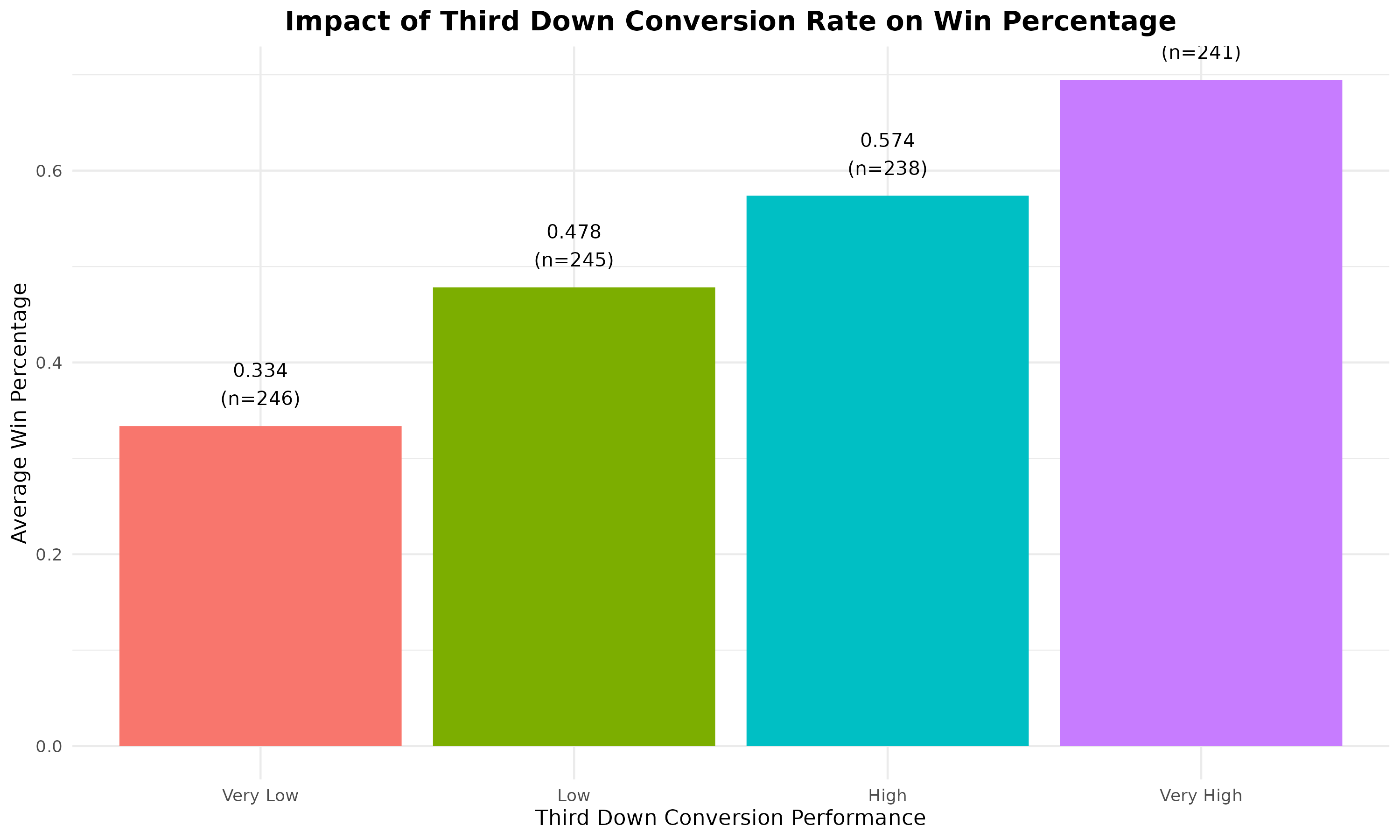
Our analysis revealed that efficiency metrics are the strongest predictors of team success, with third-down conversion rates being particularly important.
High Third-Down Conversion
69.5%
Win percentage
Low Third-Down Conversion
33.2%
Win percentage
Third Down Conversion
Teams with high third-down conversion rates had more than double the win percentage compared to teams with low conversion rates.
Turnover Margin
Teams with a positive turnover margin (>+1) had a 64.3% win rate, compared to just 35.7% for teams with a negative margin (<-1).
Red Zone Efficiency
Red zone scoring percentage showed a strong positive correlation with win percentage (r=0.58).
Our statistical models confirmed that efficiency metrics collectively explained 72% of the variation in win percentage, making them the most important category of performance indicators.
Conference Dominance
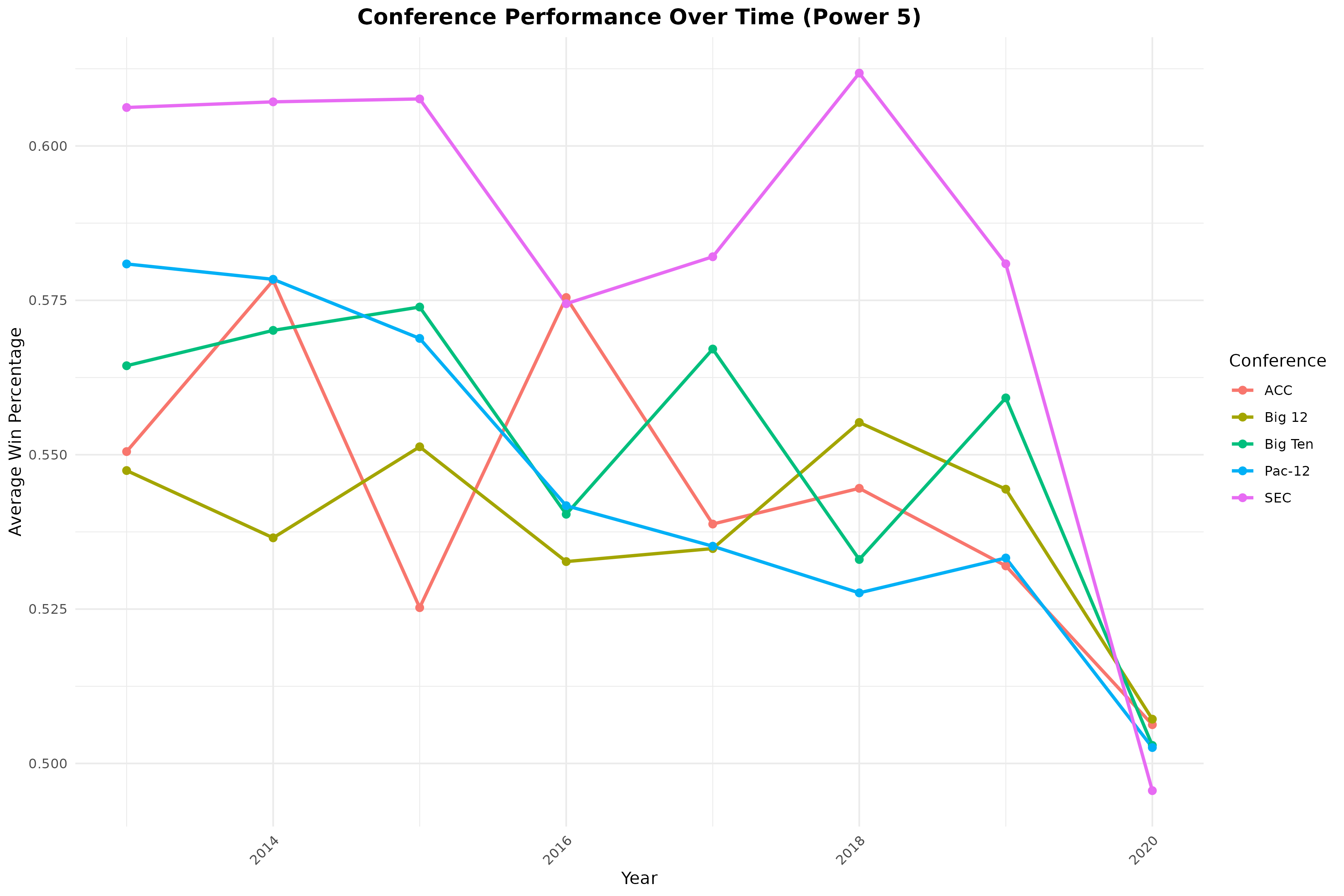
The analysis of conference performance over the decade revealed significant differences between conferences, with the SEC emerging as the most dominant.
SEC
58.3%
Average win percentage
Big Ten
55.1%
Average win percentage
Pac-12
54.6%
Average win percentage
Statistical analysis confirmed significant differences between conferences (ANOVA p-value < 0.001). The SEC maintained the highest average win percentage (58.3%), followed by the Big Ten (55.1%) and Pac-12 (54.6%). Group of Five conferences generally had lower average win percentages, with the MAC, C-USA, and Sun Belt showing the lowest performance.
Predictive Models
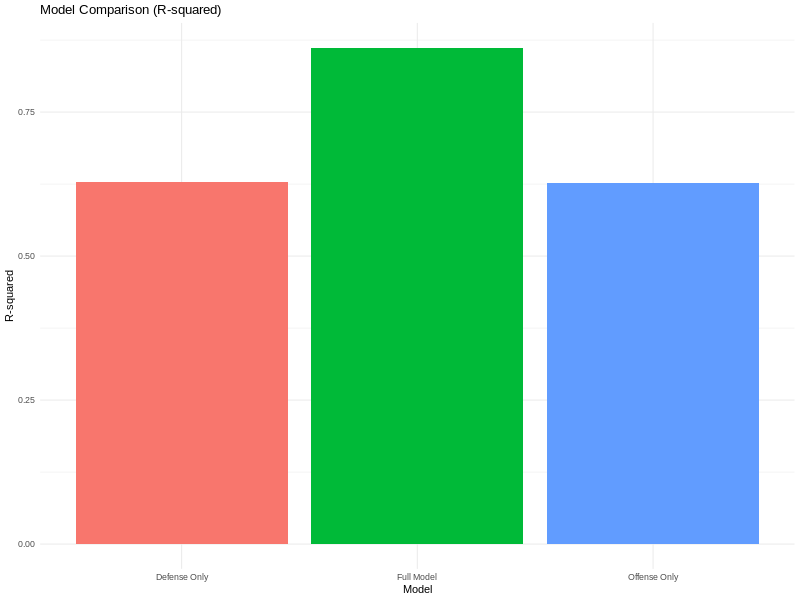
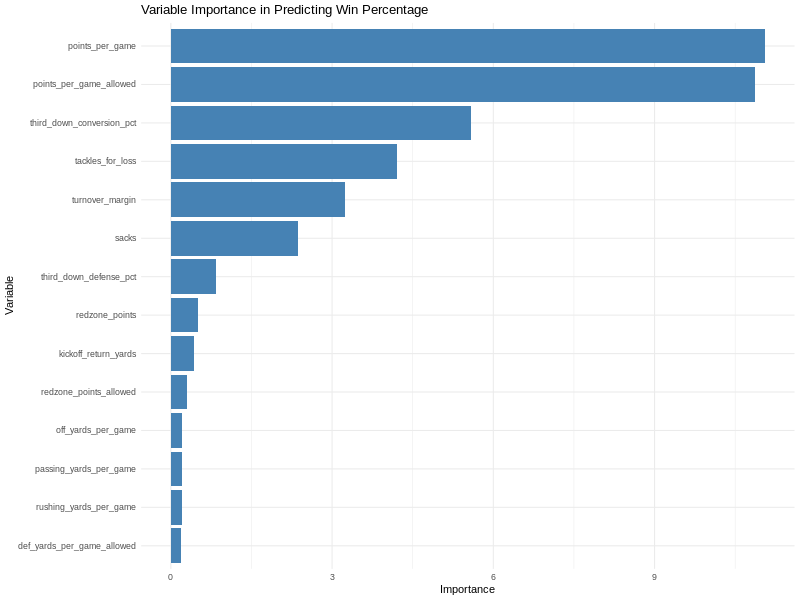
We built several statistical models to quantify the relative importance of different factors in predicting team success.
Model Performance (R-squared values)
Full Model: 0.74
Efficiency Metrics Model: 0.72
Offense-Only Model: 0.62
Defense-Only Model: 0.58
Special Teams Model: 0.02
The most important predictors of win percentage were:
Third down conversion rate (positive effect)
Third down defense rate (negative effect)
Turnover margin (positive effect)
Points per game (positive effect)
Points allowed per game (negative effect)
Special teams metrics showed a statistically significant but modest relationship with win percentage, explaining only about 2% of the variation in team success.
Recommendations for College Football Programs
1. Prioritize Efficiency Metrics
Dedicate specific practice sessions to third-down situations, implement ball security drills, and create specialized red zone packages.
2. Pursue Balanced Team Development
Allocate recruiting resources evenly between offensive and defensive talent, and ensure practice time is distributed equitably.
3. Adapt Strategies Based on Conference
Tailor recruiting and development strategies to your conference's competitive landscape and study successful programs within your conference.
4. Implement Targeted Special Teams Development
View special teams as complementary to core offensive and defensive development, focusing particularly on kickoff returns.
5. Develop Third-Down Specialists
Identify and develop players who excel in third-down situations and create specialized third-down packages on both offense and defense.